


Dental emergencies rarely happen at a convenient time. Whether it’s sudden tooth pain in the middle of the night or a chipped tooth during a weekend game in Austin, knowing how to respond quickly can make all the difference. Acting fast not only relieves pain but can also save your tooth and prevent further complications.
In a growing city like Austin—where active lifestyles, busy schedules, and family life often collide—dental emergencies are more common than you might think. Understanding what qualifies as an emergency and how to manage it before reaching a dentist is essential for every household.
If you ever find yourself searching for Emergency Dentistry Austin, it usually means you need immediate guidance and trusted care. Let’s walk through what to do when time matters most.
What Counts as a Dental Emergency?
Not every dental issue needs urgent care, but some situations require immediate attention. Here are the most common dental emergencies:
Severe Toothache
Persistent or sharp pain may indicate:
- Deep decay
- Infection
- Abscess
What to do:
- Rinse your mouth with warm salt water
- Use a cold compress to reduce swelling
- Avoid placing aspirin directly on the gums
Knocked-Out Tooth
This is one of the most time-sensitive emergencies.
What to do:
- Hold the tooth by the crown (top), not the root
- Rinse gently if dirty (do not scrub)
- Try placing it back into the socket if possible
- If not, store it in milk or saliva
- Seek dental care within 30–60 minutes
Cracked or Broken Tooth
A chipped or fractured tooth can worsen quickly if left untreated.
What to do:
- Rinse your mouth with warm water
- Save any broken pieces
- Apply gauze if there’s bleeding
- Use a cold compress for swelling
Lost Filling or Crown
Losing a restoration can expose sensitive parts of your tooth.
What to do:
- Keep the crown if you find it
- Use dental cement (available at pharmacies) as a temporary fix
- Avoid chewing on that side
Abscess or Infection
A dental abscess is a serious condition that can spread if untreated.
Symptoms include:
- Swelling in the face or jaw
- Fever
- Bad taste in the mouth
- Severe pain
What to do:
- Rinse with salt water several times a day
- Seek immediate dental care
Why Quick Action Matters
Delaying treatment can turn a manageable issue into a major problem. For example:
- A minor crack can become a full fracture
- An infection can spread beyond the mouth
- A knocked-out tooth may not be salvageable after an hour
In a city like Austin, where access to care is widely available, there’s no reason to wait and risk long-term damage.
Handling Dental Emergencies in Austin
Austin’s climate, outdoor culture, and fast-paced lifestyle contribute to certain types of dental emergencies. Here’s how local factors play a role:
Sports and Outdoor Activities
From biking along Lady Bird Lake to weekend soccer games, accidents can happen.
Tip:
Wear a mouthguard during sports to prevent injuries.
Food Culture
Austin’s love for tacos, BBQ, and crunchy snacks can sometimes lead to broken teeth or lost fillings.
Tip:
Avoid biting into hard foods like ice or bones.
Busy Schedules
With work, school, and events, many residents delay dental visits.
Tip:
Don’t ignore early warning signs like sensitivity or mild pain.
When to Go to the ER vs. a Dentist
Knowing where to go can save time and money.
Visit a Dentist For:
- Toothaches
- Broken or chipped teeth
- Lost crowns or fillings
- Mild infections
Go to the Emergency Room For:
- Uncontrolled bleeding
- Severe facial swelling affecting breathing
- Trauma involving the jaw or head
Most dental emergencies are best handled by a dental professional rather than a hospital.
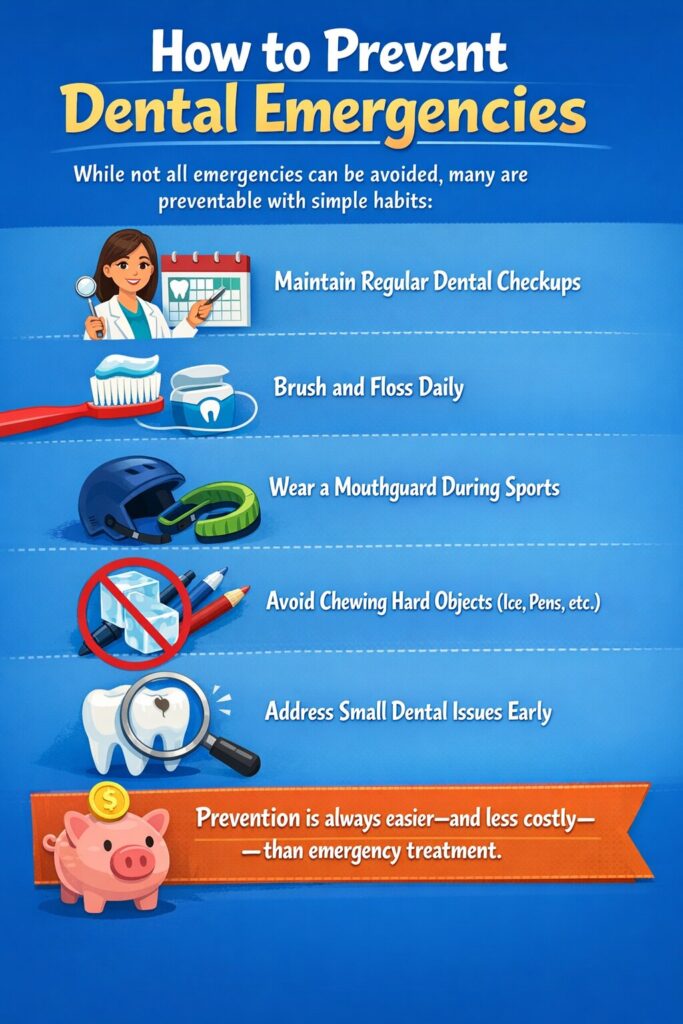
How to Prevent Dental Emergencies
While not all emergencies can be avoided, many are preventable with simple habits:
- Maintain regular dental checkups
- Brush and floss daily
- Wear a mouthguard during sports
- Avoid chewing hard objects (ice, pens, etc.)
- Address small dental issues early
Prevention is always easier—and less costly—than emergency treatment.
Common Questions About Urgent Dental Care
How quickly should I see a dentist for a toothache?
As soon as possible. Pain is often a sign of an underlying issue that won’t resolve on its own.
Can a knocked-out tooth always be saved?
Not always, but acting within 30–60 minutes greatly improves the chances.
Is swelling always an emergency?
Swelling can indicate infection. If it’s severe or accompanied by fever, seek immediate care.
What if my dental emergency happens after hours?
Many dental clinics in Austin offer extended hours or on-call services for urgent care.
What to Expect During an Emergency Visit
When you visit a dental office for urgent care, the process is usually straightforward:
- Assessment: Examination and possibly X-rays
- Pain Relief: Immediate steps to reduce discomfort
- Treatment Plan: Fixing the issue or stabilizing it
- Follow-Up Care: Additional procedures if needed
The goal is to address the problem quickly while ensuring long-term oral health.
Taking the Next Step
Dental emergencies can feel overwhelming, but knowing what to do gives you control in a stressful situation. Quick action, basic first aid, and professional care are the keys to protecting your smile.
If you’re in Austin and facing a sudden dental issue, reliable help is close by. At Cloud Dental, patients receive timely, compassionate care designed to address urgent needs without unnecessary delays. Whether it’s severe pain, a broken tooth, or signs of infection, the team is equipped to help you feel better fast.
Book your appointment today and get the care you need when it matters most.