


Dental emergencies can happen when you least expect them—during a meal, a weekend outing, or even late at night. Knowing what to do in those first few moments can make a big difference in saving your tooth and reducing pain. If you’re searching for Emergency Dentistry Austin, this guide will help you take the right steps quickly and confidently while you arrange professional care.
At Cloud Dental in Austin, TX 78758, patients often ask what qualifies as a dental emergency and how to respond. Let’s walk through practical, easy-to-follow advice so you’re prepared when it matters most.
What Is Considered a Dental Emergency?
Not every dental issue requires urgent care, but some situations should never be ignored. A dental emergency typically involves severe pain, bleeding, or risk of permanent damage.
Common dental emergencies include:
- Severe toothache or sudden pain
- Knocked-out (avulsed) tooth
- Chipped, cracked, or broken tooth
- Lost crown or filling
- Abscess or swelling in the gums
- Bleeding that doesn’t stop
If you experience any of these, seeking Emergency Dentistry Austin services as soon as possible is crucial.
Why Acting Quickly Matters
Time is critical in a dental emergency. Prompt action can:
- Save a knocked-out tooth
- Prevent infection from spreading
- Reduce the need for more complex treatments
- Relieve pain faster
For example, a tooth that has been knocked out has the best chance of being saved if treated within 30–60 minutes. That’s why knowing immediate care steps is so important.
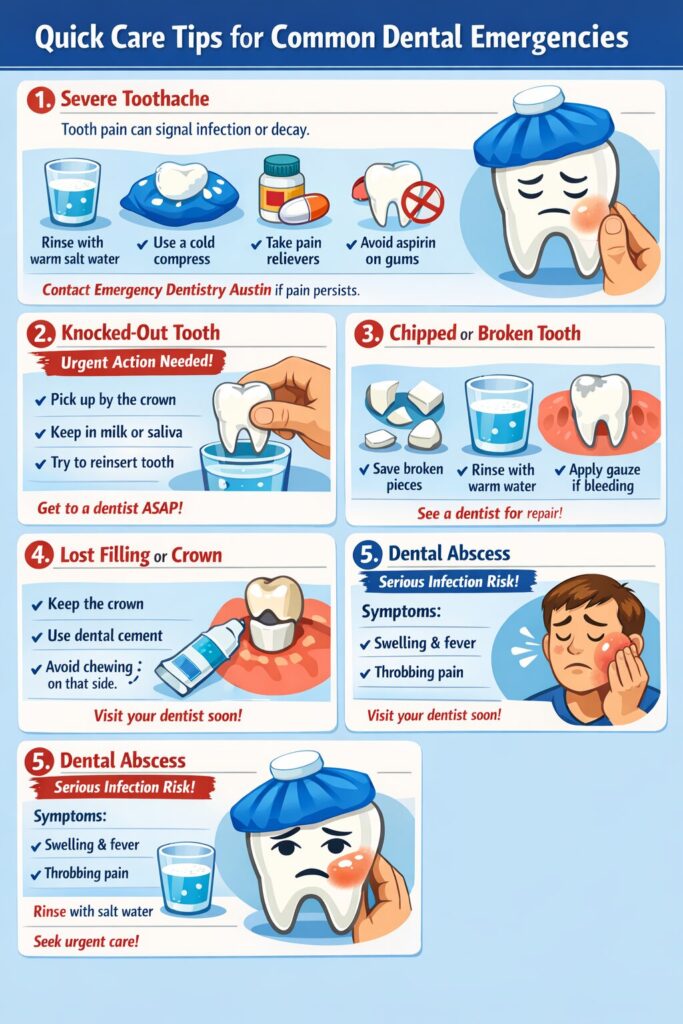
Quick Care Tips for Common Dental Emergencies
1. Severe Toothache
Tooth pain can signal infection or decay.
What to do:
- Rinse your mouth with warm saltwater
- Use a cold compress to reduce swelling
- Take over-the-counter pain relief if needed
- Avoid placing aspirin directly on the gums
If pain persists, contact an Emergency Dentistry Austin provider immediately.
2. Knocked-Out Tooth
This is one of the most urgent dental emergencies.
What to do:
- Pick up the tooth by the crown (not the root)
- Rinse gently with water (do not scrub)
- Try placing it back in the socket if possible
- If not, store it in milk or saliva
Get to a dentist within 30 minutes for the best chance of saving the tooth.
3. Chipped or Broken Tooth
Even minor chips can worsen without care.
What to do:
- Rinse your mouth with warm water
- Save any broken pieces if possible
- Apply gauze if there is bleeding
- Use a cold compress to reduce swelling
Seek professional care to restore the tooth and prevent further damage.
4. Lost Filling or Crown
This can leave your tooth sensitive and vulnerable.
What to do:
- Keep the crown if you have it
- Use dental cement (available at pharmacies) as a temporary fix
- Avoid chewing on that side
Schedule a visit for proper restoration.
5. Dental Abscess
An abscess is a serious infection that can spread if untreated.
Symptoms may include:
- Swelling in the face or gums
- Fever
- Persistent, throbbing pain
What to do:
- Rinse with saltwater several times a day
- Do not ignore swelling or pain
- Seek urgent dental care immediately
When to Visit an Emergency Dentist
You should not delay care if you experience:
- Severe or worsening pain
- Signs of infection (swelling, fever, pus)
- Trauma to the teeth or jaw
- Uncontrolled bleeding
Delaying treatment can lead to complications that are more costly and difficult to treat.
How to Prevent Dental Emergencies
While not all emergencies are avoidable, many can be prevented with good habits.
Simple prevention tips:
- Maintain regular dental checkups
- Wear a mouthguard during sports
- Avoid chewing hard objects like ice
- Practice good oral hygiene daily
- Address small dental issues early
Preventive care reduces your risk and helps you avoid unexpected dental problems.
What to Expect During an Emergency Dental Visit
When you visit a provider for Emergency Dentistry Austin, the focus is on quick relief and stabilization.
Your dentist may:
- Examine the affected area
- Take X-rays if needed
- Relieve pain or infection
- Repair or stabilize the tooth
After initial treatment, a follow-up plan may be created to fully restore your oral health.
Why Choose Cloud Dental in Austin, TX
During a dental emergency, you want care that is prompt, compassionate, and effective. At Cloud Dental, the team prioritizes patient comfort while delivering timely solutions for urgent dental issues.
Whether it’s a sudden toothache or a more serious dental injury, having a trusted local provider can make all the difference.
Common Patient Questions
What should I do if my tooth pain suddenly gets worse at night?
Try rinsing with warm saltwater and using a cold compress. Avoid eating on that side and contact a dentist as soon as possible the next day.
Can a knocked-out tooth really be saved?
Yes, in many cases. Quick action within 30–60 minutes greatly increases the chances of saving the tooth.
Is a chipped tooth always an emergency?
Not always, but it should be evaluated quickly to prevent further damage or sensitivity.
How do I know if I have a dental abscess?
Look for swelling, severe pain, or a pimple-like bump on the gums. These signs require immediate dental attention.
Can I go to the ER for a dental emergency?
Emergency rooms can help manage pain or infection, but they usually cannot treat the underlying dental issue. A dentist is the best option.
Take the Next Step Toward Relief
Dental emergencies can be stressful, but knowing what to do gives you control and confidence. Acting quickly can protect your smile and prevent long-term complications.
If you’re experiencing pain or injury and need Emergency Dentistry Austin, don’t wait. Schedule your appointment today with Cloud Dental in Austin, TX 78758 and get the care you need when it matters most.