


High-impact sports played for recreation can be thrilling, and athletes can enjoy them while staying physically and socially active. However, one drawback of engaging in high-impact sports is the risk of dental injury. A sudden impact or fall can result in chipped or knocked-out teeth or a badly injured mouth. Besides the pain, a dental injury can ruin one’s smile for several years. Dental injuries can be prevented by taking a few precautions.
For those whose lives are filled with sports like basketball, football, or even skateboarding, dental injuries are more common than one might think. Whether you are a weekend warrior or a competitive athlete, you need to make sure you protect your teeth at all times. This blog explains how to avoid dental emergencies and maintain a healthy, beautiful smile.
How to Prevent Dental Emergencies in High-Impact Sports
High-impact sports offer many thrills and opportunities, but they are also associated with increased risk. As a preventive measure, here are a few hints and tips that will help you go about it.
1. Address Any Existing Dental Issues Promptly
Existing dental conditions, such as loose fillings, tooth cracks, and misaligned teeth, should be properly addressed before engaging in sports. Dental conditions that already exist tend to make your teeth more susceptible to damage, and you might face some complications during and after the accident. For instance, if you have a cracked tooth, it may break further if you fall or are hit while playing sports.
If you are currently dealing with another dental issue, consider scheduling an appointment with your emergency dentist in Austin, TX, before returning to your sport. This helps prevent other, potentially more serious, problems in your future.
2. Maintain Good Oral Hygiene
Maintaining good teeth and gums can help you avoid dental emergencies. Brushing and flossing teeth regularly, along with routine dental check-ups, are essential for maintaining good dental health. Healthy teeth are less likely to be damaged in accidents or mishaps, and dental hygiene is equally crucial for preventing infections that might occur in such cases.
If you engage in sports regularly, it is crucial to visit an emergency dentist in Austin, TX, on a regular basis. This helps take necessary precautions against future conditions, such as tooth decay and gum disease.
3. Wear a Mouthguard
One of the best ways to avoid dental injuries during sports is to wear a specially designed mouthguard. The mouthguard will act as a shock absorber, protecting our teeth from chipping, being knocked out, or breaking. If we use a mouthguard, it will be very helpful. However, we normally don’t use it because we find it uncomfortable.
The main advantage of a custom mouthguard is that it is designed to fit your mouth perfectly, providing adequate protection. Although it is possible to purchase mouthguards off the counter, they may not be as comfortable or protective as custom-made ones. When it comes to football, basketball, hockey, or karate, it is always recommended to use a mouthguard. Not all sports are contact sports; gymnastics is not.
4. Stay Hydrated
Proper hydration is important not only for your overall health but also for your dental health. When you are dehydrated, your mouth can dry up, and dry mouth can also cause dryness in your throat. Saliva helps prevent tooth decay and mouth injuries. When your body is dehydrated, your mouth can be more vulnerable to cuts, scrapes, and chipped teeth due to dryness.
Consider bringing a water bottle to your games and practices, and drink regularly to maintain hydration and protect your teeth. If your mouth becomes too dry, you run the risk of having teeth that are sensitive as well, and that is not pleasant when you’re injured.
5. Know the Risks of Each Sport
Each sport has its own level of risk, and thus requires an assessment of how it affects our teeth and mouth. For instance, in football and hockey, when two or more players collide or an individual hits the ground, there is usually an increased risk of dental complications. In running and skateboarding, one risk is falling and knocking out one’s teeth.
By understanding the risks involved in the sport that you have chosen, you can take extra precautions to protect yourself. For example, wearing a helmet or face shield during activities that carry more risk can provide an extra layer of protection for your face/teeth.
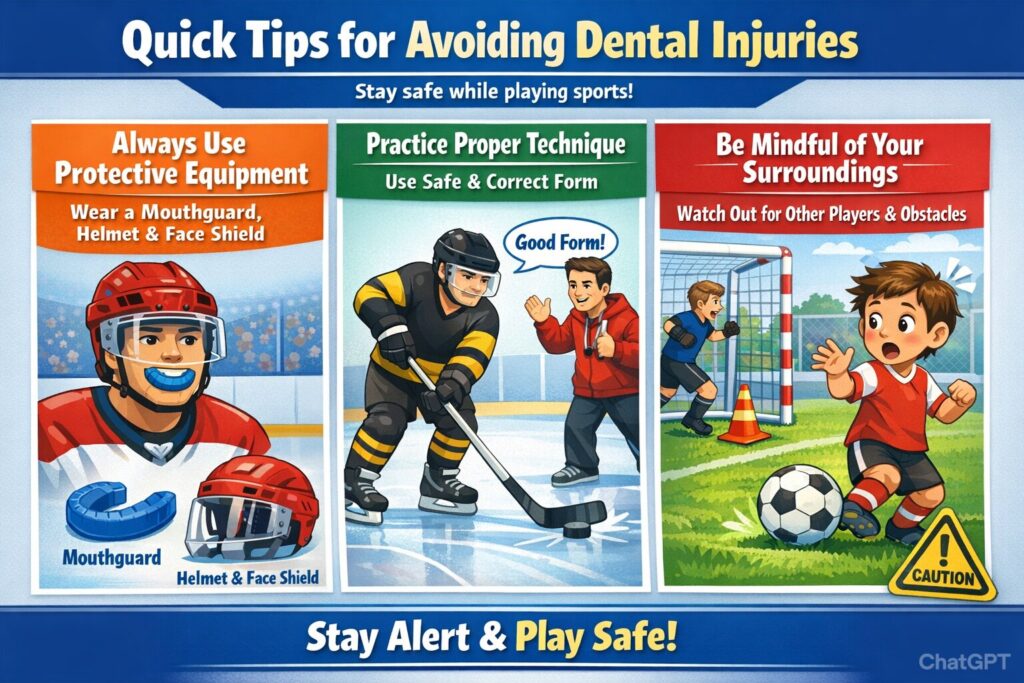
Quick Tips for Avoiding Dental Injuries
Dental injuries can be sudden, and they can happen during sports, but with a few precautions, you can avoid these injuries. In this part of the chapter, we will provide you with some effective measures that will help you be safe while playing sports.
- Always Use Protective Equipment: In addition to a mouthguard, wearing headgear or face shields can protect your mouth and face from injury.
- Practice Proper Technique: In sports like hockey, using proper technique can help you avoid falling or getting hit in the face. Proper training and technique are crucial in caring for yourself.
- Be Mindful of Your Surroundings: Be aware of other players around you. You also need to be careful around obstacles, walls, and any equipment you may encounter.
Protecting Your Smile in High-Impact Sports
While high-impact sportsperson recreational activities can be a lot of fun, the risk of dental emergencies should not be taken lightly. Practicing sound oral health habits, staying hydrated, and addressing existing dental conditions can go a long way toward preventing dental injuries. If, however, a dental emergency occurs during your sports activities, it is important to seek emergency dental treatment in Austin, TX, promptly, as time is critical for saving a tooth.
At Cloud Dental, our aim is to help you keep your smile safe, not just during sport but also in day-to-day life! If you’ve had a tooth injury or are concerned about your teeth in general, contact us today to book an appointment with our friendly staff!
Questions People Ask About Dental Emergencies
How can a mouthguard prevent dental emergencies in sports?
A custom mouthguard cushions the impact from falls or collisions, protecting your teeth from chips, fractures, or even dislodgement. It’s a vital piece of equipment for athletes in high-contact sports to keep their smile safe.
Why is good oral hygiene important for athletes?
Good oral hygiene prevents dental problems like cavities and gum disease, which can weaken your teeth and make them more vulnerable during sports. Regular brushing, flossing, and checkups help keep your teeth strong and injury-resistant.
Can dehydration lead to dental injuries?
Dehydration reduces saliva production, leaving your mouth dry and more prone to cuts or tooth damage. Saliva naturally protects your teeth, so staying hydrated helps maintain oral health and reduces the risk of sports-related injuries.
What should I do if I have a loose filling or a cracked tooth before playing sports?
If you have a loose filling or a cracked tooth, see your emergency dentist before playing sports. They’ll fix the issue to prevent further damage, ensuring your teeth are protected from impact during physical activities.
What other safety gear should I wear to protect my teeth during sports?
Along with a mouthguard, consider wearing a face shield, helmet, or full protective gear to safeguard your teeth during sports like football, hockey,
When should I see an emergency dentist for a sports-related dental injury?
If you sustain a knocked-out tooth, severe pain, bleeding, or noticeable damage to your teeth or gums, contact an emergency dentist immediately. Early treatment can help save the tooth and minimize further complications.