


You may not immediately associate your gum health with the health of your heart, but the fact is, the two are closely linked! We all know that heart disease is the number one fatal health issue, but few of us know the role that the health of our gums plays in preventing this potentially deadly disease.
Overall health care involves both the health of our gums and our heart. As we endeavor to be healthier this year, it is critical to understand the connection between gums and heart disease. This blog will help you understand and take the necessary steps toward a healthier smile and a healthier heart.
How Gum Disease Affects Your Heart Health?
Gum disease is a bacterial infection that attacks the gums and tissues that support your teeth. It often starts as gingivitis, an early form of gum disease that can be successfully managed by brushing and flossing every day, and going to the dentist for checkups. If left untreated, gingivitis may progress to periodontitis, a more serious form of gum disease.
One question that usually comes up at this point: how is gum disease connected to heart health? Bacteria that cause gum infections can travel into our bloodstream, causing inflammation throughout the body, including the blood vessels leading to our hearts.
Inflammation of our blood vessels and in the region around our hearts is directly linked to the progression of atherosclerosis, or hardening and narrowing of the arteries. This can lead to heart attack, stroke, and other cardiovascular diseases.
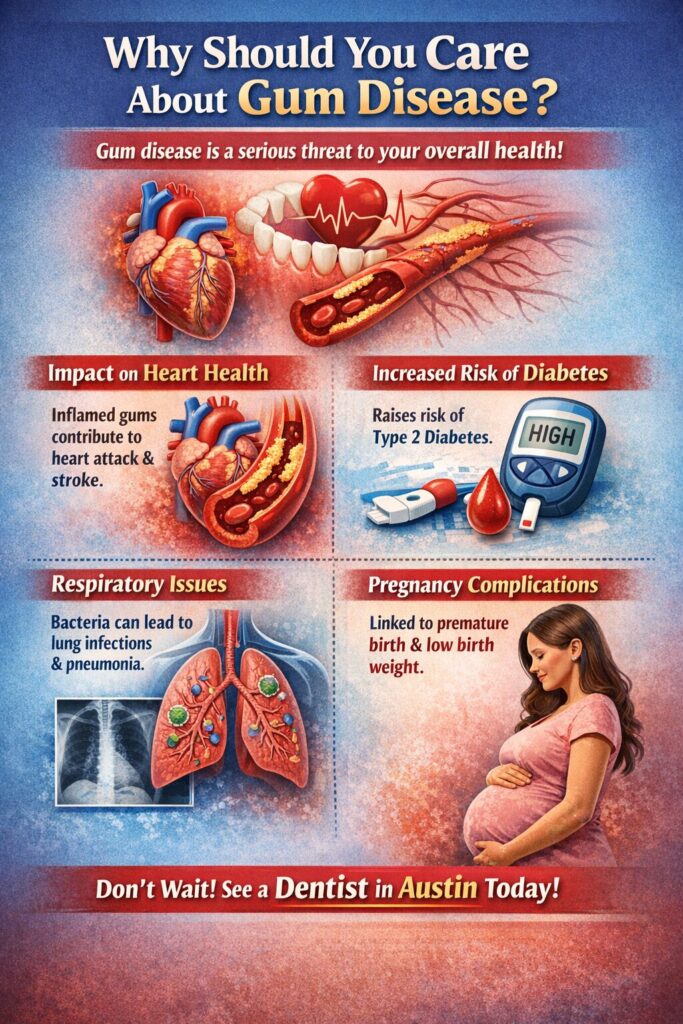
Why Should You Care About Gum Disease?
Gum disease is not simply about a good smile-it actually has a major impact on your overall health. As it is a source of inflammation, it can affect your blood vessels and your chances of suffering other health problems, even heart disease.
Here are some top reasons why you should care about gum disease and consult a dentist in Austin immediately:
- Impact on Heart Health: Gum disease inflames blood vessels and contributes to plaque buildup and arterial narrowing, which can lead to a heart attack and stroke.
- Increased Risk of Diabetes: Gum disease will also increase your risk of developing type 2 diabetes or worsening existing diabetes.
- Respiratory Issues: Bacteria from the gums may be inhaled, causing lung infections such as pneumonia. This risk is even greater in those who already have weak immune systems.
- Pregnancy Complications: Pregnant women are at higher risk. Gum disease is linked to premature delivery of a baby and low birth weight.
By caring for your gums, not only do you maintain good oral health for the sake of your smile, but you also help keep your entire body healthy and your heart disease risks at bay. Good flossing and brushing habits, coupled with dental checkups, are crucial to keeping the risk low.
How to Maintain Healthy Gums and a Healthy Heart?
Luckily, it’s not that hard to prevent gum disease and contribute to a healthier heart by following these easy tips:
- Brush and Floss Every Day: One of the best ways to keep gum disease at bay is with daily oral hygiene. You need to brush at least twice a day with fluoride toothpaste and use dental floss every day.
- Visit Your Austin Dentist Regularly: Seeing your local dentist at least once every six months can help detect issues early. A routine cleaning and checkup at your dentist’s office can help you avoid getting or dealing with gum disease.
- Don’t Smoke: Smoking greatly contributes to gum disease. It weakens your immune system, making it harder for you to fight against gum disease. If you’re a smoker, there are benefits not only to your heart, but to your gums when you quit.
- Eat Well: Eating right not only helps your gums and heart but also improves your overall health. Make sure you’re eating the right foods, choosing healthy options rather than those with excessive sugar, which may lead to gum problems.
- Take Time To Reduce Stress: Chronic stress affects not only your heart but also your gums. When your body is under significant stress, it releases toxins that harm your gums by increasing inflammation. The key is to learn to reduce your stress level so you aren’t a danger to your heart or your gums.
- Exercise on a Regular Basis: When you exercise, your blood flows more efficiently through your blood vessels, helping reduce your risk of heart disease. Exercising also plays a role in your overall weight and sugar control.
How Can Your Austin Dentist Help Prevent Heart Disease?
Having an Austin dentist can help you with your smile and protect your heart. These regular appointments can be a great time for dentists to help catch any signs of gum disease. This helps prevent you from ever developing serious gum disease. Routine cleanings will remove any plaque or tartar build-up from your teeth or gums. You may miss this at home with your regular brushing. With routine checkups, you may save your mouth and avoid a serious health condition.
It is an important step toward your heart’s health to have regular dental visits to monitor your gum health. Knowing how to improve your gum health is the first step toward preventing issues such as atherosclerosis and other heart diseases.
Gum Disease Prevention Tips
You can improve the health of both your gums and your heart with the following tips. They are all very important for your overall health:
- Schedule Your Dental Checkup: Make sure you get your dental cleaning and checkup every 6 months so any gum issues can be caught and addressed.
- Re-Evaluate Your Oral Hygiene: Take time to brush properly with a dentist-recommended fluoride toothpaste. Use the right brushing techniques to properly remove food and plaque from your teeth and gums.
- Commit To A Healthy Lifestyle: Alongside taking good care of your gums and teeth, don’t forget about taking good care of your body. Eating right and exercising regularly is as important for your oral health as for your overall body’s health.
Protect Your Smile, Protect Your Heart
Your gums play a vital role in not only maintaining a beautiful smile but also in promoting and enhancing the health of your entire body. A healthy mouth can directly lead to a healthier heart, putting you one step closer to reducing your risk of heart disease.
Taking care of your smile is an important, proactive measure to support your oral and heart health. Call us today to schedule an appointment with our Austin dental team. Let Cloud Dental help with a routine cleaning or give you tips on how to properly maintain your oral health.
Questions People Ask About Gum Health and Heart
Can gum disease cause heart problems?
Yes, gum disease can contribute to heart problems by allowing harmful bacteria to enter the bloodstream. This can cause inflammation that leads to plaque buildup in arteries, increasing the risk of heart disease and stroke.
How often should I visit my dentist to prevent gum disease?
It’s recommended to visit your dentist every six months for regular checkups and cleanings. This helps catch early signs of gum disease, ensuring prompt treatment and reducing the risk of more serious oral and heart health issues.
What are the symptoms of gum disease?
Symptoms of gum disease include swollen, bleeding gums, persistent bad breath, and gum recession. If you notice any of these signs, it’s crucial to visit your dentist for an evaluation and early intervention to prevent further complications.
Can I prevent gum disease at home?
Yes, you can prevent gum disease by brushing at least twice daily, flossing every day, avoiding smoking, and maintaining a healthy diet. Regular dental checkups are also essential for early detection and professional cleaning.
Can gum disease affect my overall health?
Yes, untreated gum disease can increase the risk of serious health issues such as heart disease, diabetes, and respiratory problems. Maintaining healthy gums supports overall well-being and helps prevent these potential complications.
Does smoking affect my gums and heart?
Yes, smoking increases the risk of gum disease by impairing blood flow to the gums and weakening the immune system. It also contributes to heart disease, making quitting essential for both oral and cardiovascular health.