

Choosing how to straighten your teeth is more than a cosmetic decision—it’s a step toward long-term oral health, confidence, and balance. Like many important choices in life, the right path depends on your needs, your lifestyle, and your goals.
In a city like Austin, where people value both wellness and individuality, patients often ask: should I choose traditional braces or clear aligners? If you’re exploring Invisalign Austin options, you’re already on the right path toward understanding modern orthodontic care.
Let’s walk through this decision together—calmly, clearly, and with your well-being at the center.
Understanding Your Options
Before comparing, it’s important to understand how each treatment works.
Traditional Braces
Braces use metal or ceramic brackets attached to your teeth, connected by wires that gradually move teeth into proper alignment.
Invisalign® Aligners
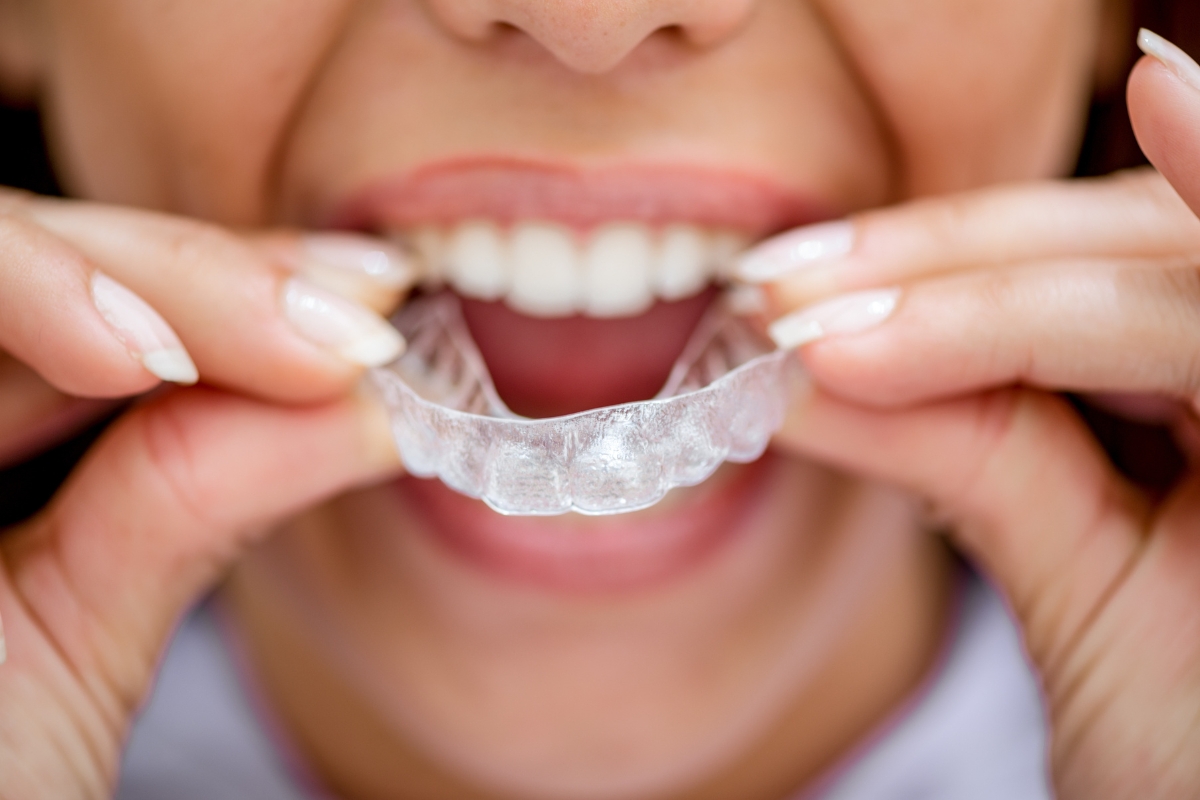
Invisalign aligners are clear, removable trays custom-made to gently shift your teeth over time.
Both methods are effective. The difference lies in how they fit into your daily life.
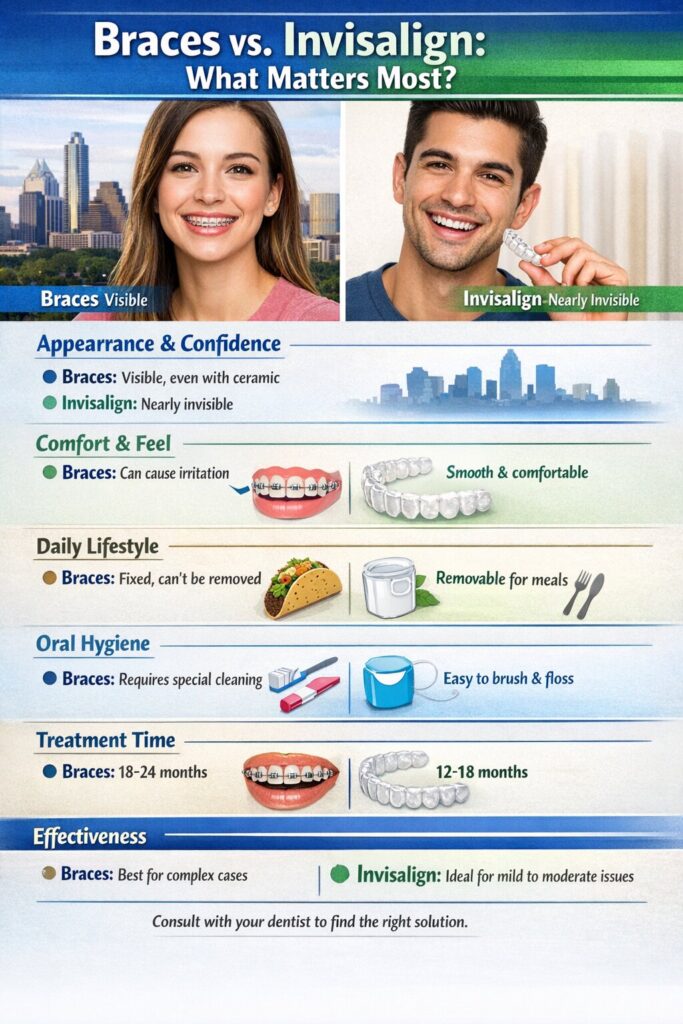
Braces vs. Invisalign: What Matters Most?
Appearance and Confidence
- Braces: Visible, even with ceramic options
- Invisalign: Nearly invisible
If your work or social life in Austin involves frequent interactions—meetings, events, or public-facing roles—many patients prefer the subtle look of clear aligners.
Comfort and Feel
- Braces: Can cause irritation from wires and brackets
- Invisalign: Smooth plastic, generally more comfortable
Aligners are designed with comfort in mind, though you may feel slight pressure during adjustments (a sign they’re working).
Daily Lifestyle
- Braces: Fixed—no removal required
- Invisalign: Removable for eating, brushing, and special occasions
For busy Austinites who enjoy dining out on South Congress or grabbing tacos at local food trucks, removable aligners make meals easier—no food restrictions.
Oral Hygiene
- Braces: Cleaning requires extra tools and time
- Invisalign: Easy brushing and flossing after removal
Good oral hygiene is essential in both cases, but aligners simplify the process.
Treatment Time
- Braces: Typically 18–24 months
- Invisalign: Often 12–18 months (varies by case)
Some cases may require braces for precise control, especially complex alignment issues.
Effectiveness
- Braces: Best for severe or complex cases
- Invisalign: Ideal for mild to moderate issues
An experienced dentist will evaluate your bite, spacing, and alignment before recommending the right solution.
Who Is a Good Candidate?
Braces May Be Better If You:
- Have severe crowding or bite issues
- Prefer a “set it and forget it” option
- Are less likely to wear aligners consistently
Invisalign May Be Better If You:
- Want a discreet solution
- Have mild to moderate alignment concerns
- Can commit to wearing aligners 20–22 hours daily
Consistency is key. Aligners only work if worn as prescribed.
Local Considerations for Austin Patients
Living in Austin means an active, social, and health-conscious lifestyle. Your orthodontic choice should fit into that rhythm.
Here’s what local patients often consider:
- Outdoor lifestyle: Aligners are convenient for active routines—hiking, biking, or yoga
- Professional environment: Clear aligners suit office settings and networking
- Food culture: Enjoy Austin’s vibrant dining scene without restrictions
Many patients exploring Invisalign Austin services are drawn to the flexibility aligners offer in a fast-paced, experience-driven city.
Cost and Value
Costs vary depending on complexity, but:
- Braces and Invisalign are often comparable in price
- Many dental plans cover both options
- Payment plans are commonly available
Think of this as an investment—not just in your smile, but in your long-term oral health.
What to Expect During Treatment
No matter which option you choose, the journey follows a similar path:
Step-by-Step Process
- Consultation and digital scans
- Personalized treatment plan
- Regular check-ins and adjustments
- Retainers after treatment to maintain results
With aligners, you’ll switch trays every 1–2 weeks. With braces, your dentist adjusts wires periodically.
Common Concerns Patients Have
Will it hurt?
You may feel mild discomfort at first, but it fades quickly. Both options are manageable.
Will people notice?
Braces are visible. Aligners are discreet—most people won’t notice them.
What if I forget to wear my aligners?
Consistency matters. Missing wear time can delay results.
Can adults still straighten their teeth?
Absolutely. Many adults in Austin choose orthodontic care later in life.
Questions Patients Often Ask
How do I choose between braces and aligners?
It depends on your dental condition, lifestyle, and preferences. A professional evaluation is essential.
Are clear aligners safe?
Yes. They are FDA-approved and widely used in modern dentistry.
How often will I need dental visits?
Typically every 6–8 weeks, depending on your treatment.
Will my results last?
Yes—if you wear your retainers as instructed.
A Balanced Perspective
Think of your smile as part of your overall well-being. Like the steady flow of a river shaping stone over time, orthodontic treatment works gradually, gently guiding your teeth into harmony.
Braces offer strength and control. Invisalign offers flexibility and subtlety.
Neither is universally “better.” The right choice is the one that aligns with your life.
Conclusion: Your Next Step Toward a Healthier Smile
Choosing between braces and aligners is a personal decision, guided by both clinical expertise and your everyday needs. The best outcomes come from informed choices and trusted care.
At Cloud Dental, we focus on helping Austin patients find balance—between function, aesthetics, and long-term health. Whether you’re considering braces or exploring Invisalign Austin options, our team is here to guide you with clarity and care.
Book your appointment today and take the next step toward a confident, healthy smile.